Someone asks for a “12-watt light” as though the number describes how bright the room will be. It sounds sensible because, for years, people learned to associate a larger wattage with a brighter lamp. But with modern LED lighting, that shortcut is unreliable.
Watts measure electrical power. They do not directly measure visible light output.
Understanding this one distinction makes it easier to compare products, question exaggerated claims and avoid buying more electrical power than the space needs.
Watts, lumens and efficacy: three different things
Wattage tells you how much electrical power a fitting draws when operating under the stated conditions. Lumens describe the amount of visible light a source emits. Luminous efficacy, usually shown as lumens per watt, relates light output to the input power.
A well-designed LED product can produce more useful light per watt than a less efficient one. That means a higher-wattage fitting is not automatically the brighter—or better—choice. The actual comparison must use verified product data, not a guess based on the number printed on the box.
There is a catch: even lumens do not tell the whole story.
Where does the light go?
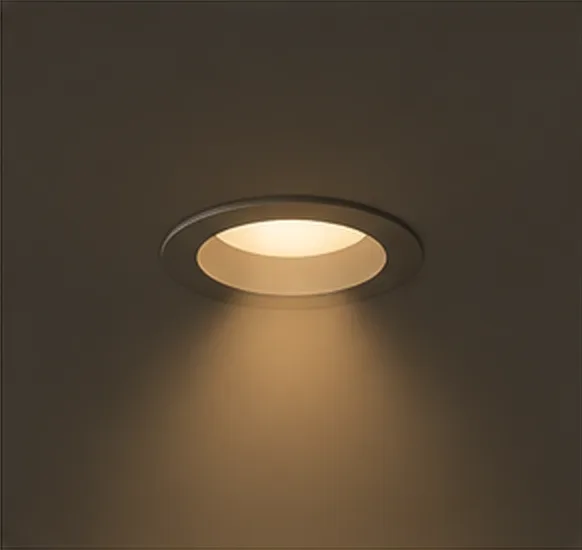
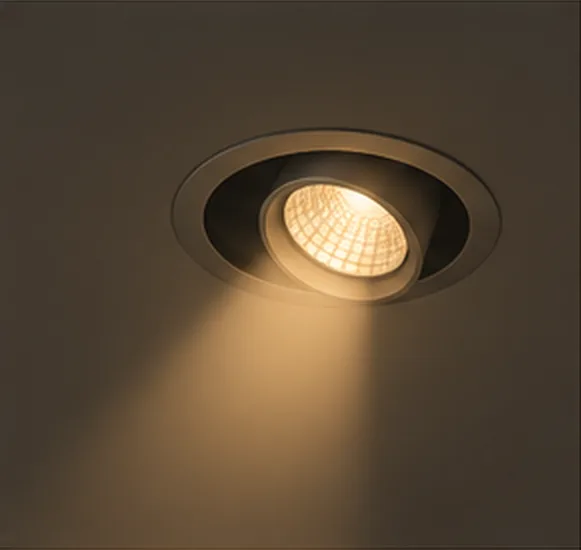
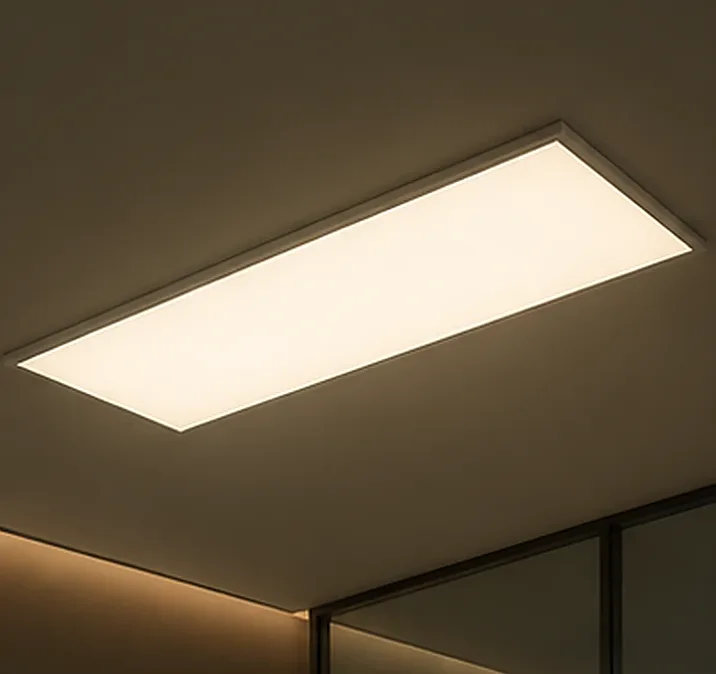
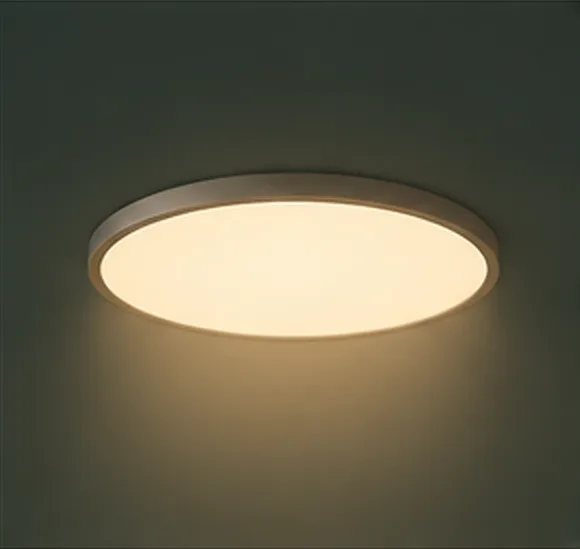
Imagine two fixtures that emit similar total lumens. One spreads light broadly through a diffuser. The other directs it into a defined beam. A surface directly below the second fitting may appear much brighter, although the overall lumen figures are comparable.
This is why an architectural lighting decision cannot be made from a watt-and-lumen table alone. Beam angle, intensity distribution, mounting height and surface reflectance all change the result.
For worktops and desks, the useful quantity is often illuminance on the working surface, commonly measured in lux. For an accent wall, the distribution and appearance of the lit area may matter more than a single lux value. There is no one number that solves every design problem.
Bigger numbers can hide smaller compromises
A brighter fixture may also create more glare in the wrong position. A wider beam can lose the dramatic emphasis you wanted on an artwork. And a product with high output but poor colour quality can make carefully chosen finishes look disappointing.
When comparing options, ask for credible information on colour temperature, colour rendering, optics and the driver where those details matter. Check that the figures relate to the exact model and variant, not simply a product family with several different versions.
A practical shopping example
Suppose you're choosing lighting for a passage. You want comfortable visibility and reasonably even coverage. A high-output narrow beam may create bright circles and dark gaps; a suitably diffused fitting may distribute the light more evenly. For a textured wall, the preference might reverse because you want contrast and direction.
Both choices can be correct. Neither is determined by buying the biggest wattage available.
This is also why the number of ceiling points is not a reliable substitute for planning. Fixture placement and light distribution change how those points work together.
What should you compare instead?
Start with the intended use, then check verified lumens, wattage, beam or distribution, colour temperature, colour rendering and any installation or control requirements. If you're working on a complex room, ask for a proper lighting calculation using actual product data rather than a generic light-count formula.
And consider maintenance and suitability. A fixture that cannot be installed safely, serviced conveniently or used with the intended control system is not a good choice simply because its efficiency looks attractive on paper.
Don't let a comparison table make the decision for you
Product tables are useful for narrowing choices, not for replacing judgment. A luminaire with a slightly lower nominal output may be better suited to an accent application because its optics control the beam. Another with more generous distribution may make more sense in a utility room.
Ask to see the result at the expected mounting height. If the ceiling is much higher or the materials much darker than those in a display area, the visual result may differ significantly.
The best light is not necessarily the one with the highest wattage or even the highest lumen rating. It is the one that puts appropriate light in the appropriate place while using energy sensibly.
Explore the lights: Architectural lighting · The light calculator
Have a lighting requirement? Ask us on WhatsApp.