You can spend months finding the right sofa, deciding between two nearly identical paint colours and choosing a coffee table that finally feels right. During the day, everything looks beautiful. Then evening arrives, the ceiling lights go on, and the room somehow loses its character.
The furniture hasn't moved. The colours haven't changed. So what happened?
Often, the room is being lit as one big surface instead of a collection of places where life happens. We think about visibility—can I see everything?—and forget about atmosphere—what deserves attention, what should feel quiet, and where should the eye naturally settle?
A room needs more than an on switch
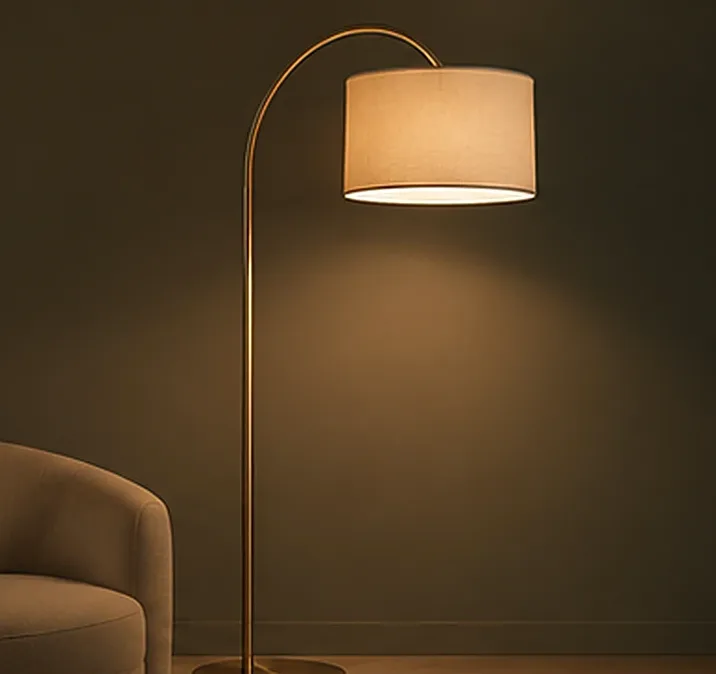
Imagine two identical living rooms. In the first, every downlight is on at full brightness. The floor is easy to see, the corners are visible, and the whole room feels consistently bright. In the second, a soft light lands on the sofa, a wall gets a gentle wash, and a floor lamp makes the reading chair inviting. The rest of the room is allowed to be slightly darker.
Neither approach is automatically correct. You might want the first when cleaning or hosting a lively gathering. But for a relaxed evening, the second has something the first often lacks: a sense of hierarchy. Your eyes know where to go.
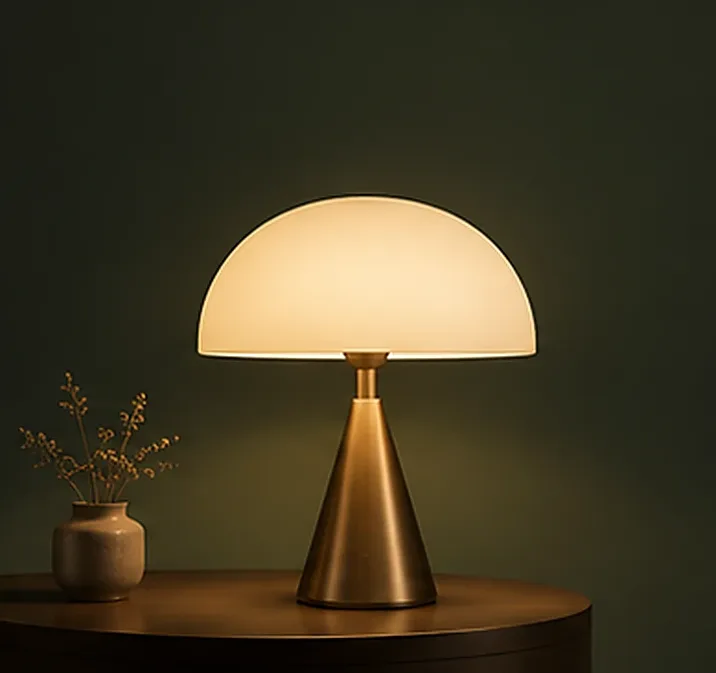
That is the useful idea behind layered lighting. A general layer makes the room usable. A task layer supports reading or another focused activity. An accent layer draws attention to a plant, texture, artwork or architectural detail. Decorative fixtures can be part of those layers or simply add personality.
Start with what actually happens in the room
A living room in a Pune apartment may be a television room, a place for guests, a child's play area and occasionally a workspace. One lighting arrangement is unlikely to suit all four uses equally well.
Instead of counting ceiling fixtures first, try describing three evenings. On a weekday, someone watches television while another person reads. On a weekend, friends gather around the coffee table. On a quieter night, perhaps just one corner is occupied. Where would useful light be needed in each scene? Where might direct light become distracting?
These questions change the plan. A bright source in the viewer's line of sight may be uncomfortable when watching television. A beautiful pendant above the wrong place can create an unwanted visual obstacle. A reading chair with no dedicated light may make its occupant reach for the main ceiling switch.
The ceiling is not the whole lighting plan
False ceilings offer convenient positions for recessed fixtures, but a row of identical lights is not automatically a design. Light also comes from walls, shelves, cabinetry, table lamps, floor lamps and carefully placed profiles.
Wall lighting is particularly effective because we look at vertical surfaces more often than we look at the floor. Illuminating a textured wall or softly brightening the area behind a sofa can make the room feel visually spacious without needing to make every corner equally bright. The result depends on wall material, fixture position and beam control; there is no universal distance that works for every wall.
A decorative pendant or chandelier can become a focal point, but it should be chosen with the seating layout and ceiling height in mind. A statement fixture cannot fix poor task lighting on its own.
Three mistakes worth checking before buying anything
Everything works together, but nothing works separately. If the cove light, ceiling lights and wall lights are all on a single control, you lose flexibility. Plan practical switching groups and, where supported by compatible products, dimming before the installation is finalised.
The light source is more visible than the room. This can happen when downlights sit directly over favourite seats or when a spotlight faces someone across the room. Recessed optics, placement and beam angle all matter.
The room looks different from the sample photograph. That's normal. Your paint, marble, wood, furniture and daylight change how the same lamp appears. Choose the effect you're after, but confirm it against real materials rather than assuming an image will translate exactly.
A simple way to plan your living room
On a rough sketch, mark the sofa, television, reading chair, table and any feature wall. Then mark the main activities. Ask what needs broad illumination, what needs focused light and what might benefit from an accent. Only after that should you decide which fixture families could produce those effects.
If the room is already finished, this exercise is still useful. A portable lamp, a different switching arrangement or a carefully selected wall fitting may improve the experience without rebuilding the ceiling. Electrical changes should be evaluated and carried out by a qualified professional.
A good living room doesn't need to be bright everywhere, all the time. It needs to feel right for the people using it. Once you notice that difference, you start seeing lighting less as the last item on the interior-design checklist—and more as part of the room itself.
Explore the lights: Decorative lighting · Architectural lighting
Have a lighting requirement? Ask us on WhatsApp.