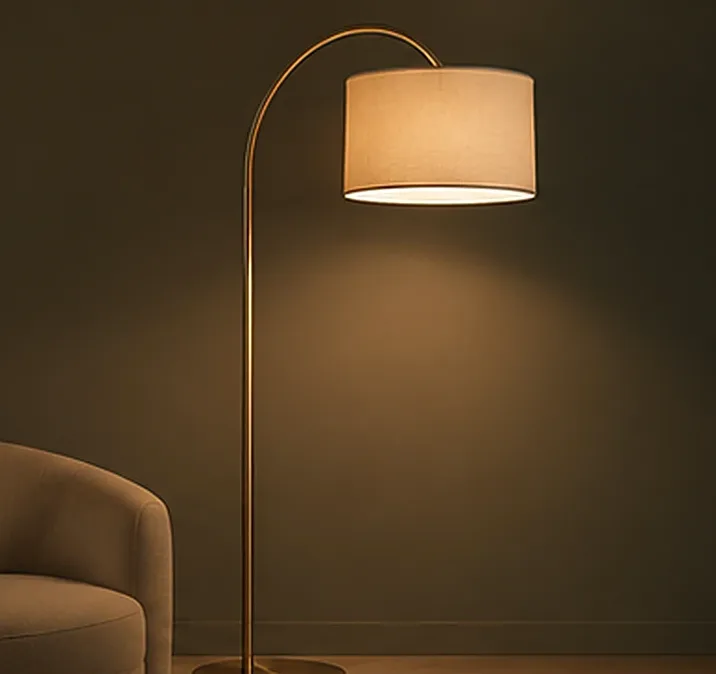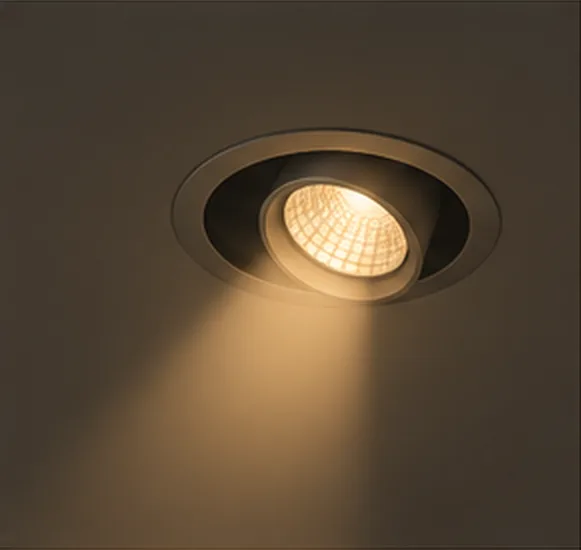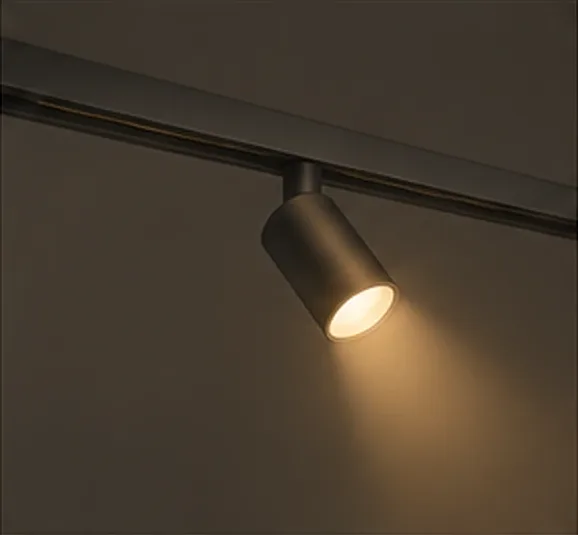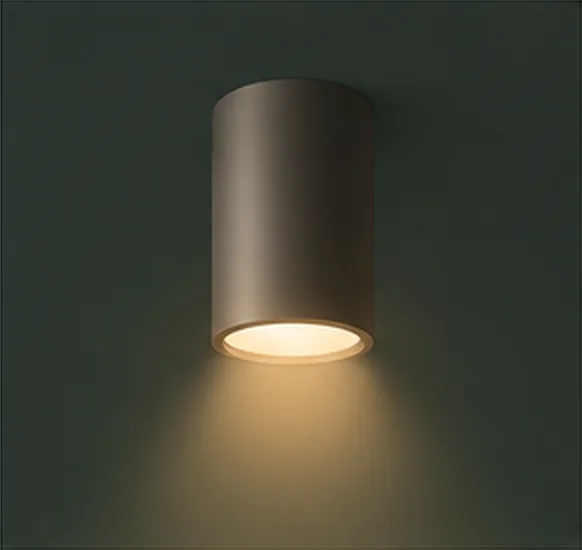
A ceiling full of downlights can look neat and expensive. The fittings are small, the plaster is smooth, and during a quick walk-through the room appears evenly illuminated.
Then you settle onto the sofa, look across the room and notice that several bright light sources are pointing straight into your eyes. The room may be adequately lit, but it's not particularly pleasant to sit in.
This is one of the reasons glare deserves attention before the lights are installed.
Why glare isn't the same as brightness
Brightness is not automatically uncomfortable. You can enjoy a bright, sunlit room without wanting to shield your eyes from every surface. Glare is about the visual relationship between a bright source and its surroundings, including where it sits in your field of view and what you're trying to look at.
A small exposed light source in a relatively dark ceiling can be particularly noticeable. A fixture positioned directly above or just ahead of a seated person may be far more distracting than the same fixture in a different position.
It is possible to reduce general output and still have a visible uncomfortable source. That is why the answer is not always “use a lower-watt light.”
Look at the light from the places people occupy
Ceiling layouts are usually drawn in plan view. People do not experience rooms from a plan view. They look horizontally while watching television, read with their head slightly tilted, glance towards a dining table and lie back in bed.
Try the room at those angles. Imagine where eyes will be at seated and standing heights. A downlight that looks subtle when you're standing beneath it may be intrusive from a sofa across the room.
Optical control changes the experience
Recess depth, shielding, reflector design, beam angle and diffuser characteristics influence how a downlight appears. A deeply recessed source may reduce direct visibility from certain angles. A diffused fitting spreads light more broadly but can still be bright at the aperture. There is no universally glare-free category.
Some manufacturers publish specific glare-related information or photometric data. For a technically demanding environment, those documents are more useful than judging a fixture from a front-facing marketing image.
Placement matters as much as the fitting
Even a carefully designed downlight can be poorly positioned. A narrow-beam source meant to highlight a table may miss its target when the furniture moves. A row of spots beside a polished wall can create distracting reflections. A light aimed across a room may be seen directly by people entering from the opposite direction.
The solution might be moving the fixture, choosing a different optic, using a wall wash, adding indirect light or reducing the number of direct sources. Sometimes the most effective change is to stop asking the ceiling to do every job.
What to check in a sample
Don't just hold a downlight up and look at its glowing face. View it from a realistic angle and distance. Check the light it casts onto a surface. Compare the aperture, depth and edge of the beam. If the intended room has glossy materials, test for reflections.
Also consider whether the selected lighting can be controlled in practical groups. Compatible dimming may help adjust a scene, but it doesn't replace thoughtful optical design.
A better question for your lighting plan
Instead of asking only, “Will this room be bright enough?” ask, “Will the useful surfaces be properly lit, and can people comfortably look around the room?”
An often overlooked source of glare: reflection
Even when a bright aperture is not directly in your sightline, it may appear in a mirror, a glossy floor or a polished countertop. In rooms with reflective finishes, think about the paths of reflected light as part of the design.
This is also why a sample should be viewed against real materials. A matt sample board can make a fitting seem gentle, while the final polished wall may reveal a very different experience.
That second part is easy to forget because it isn't obvious in a ceiling drawing. Yet it's often the difference between a room that photographs beautifully and a room that actually feels good to occupy.
Explore the lights: Architectural lighting
Have a lighting requirement? Ask us on WhatsApp.