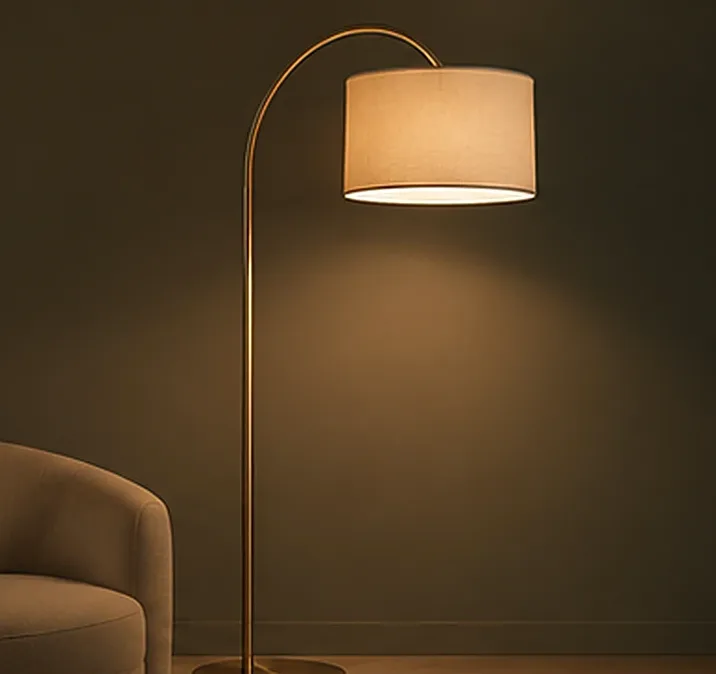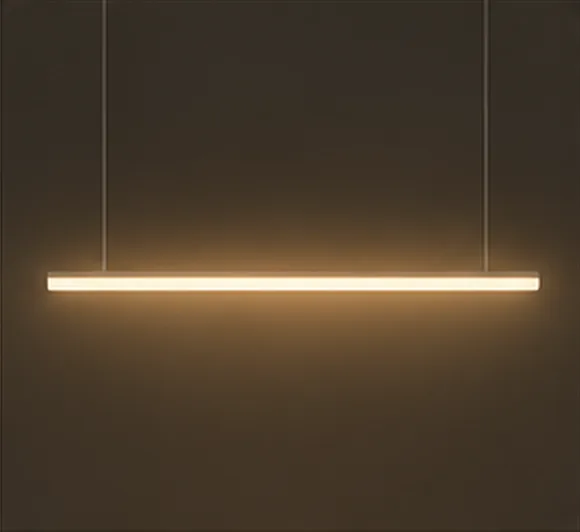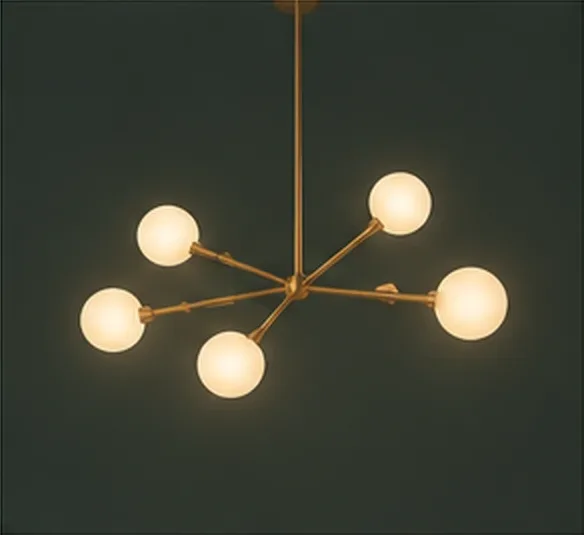
A chandelier can look spectacular when you see it on its own. Suspended against a dark ceiling or displayed in a beautiful showroom, it is almost impossible not to look up. But at home, it has to live with everything else: the ceiling, furniture, doors, people moving around, and the view from one room into another.
That's why the first question shouldn't be, “Which chandelier looks the most luxurious?” It should be, “What should this chandelier do for this particular room?”
Look at the room before you look at the fixture
Start with the space from several viewpoints. A dining-area chandelier is usually read alongside the table below it. A double-height entrance may be seen from the ground floor, the staircase and an upper landing. A bedroom pendant may be visible from a seated or lying-down position.
Each view changes the ideal shape, scale and suspension. A chandelier that's perfectly proportioned in a catalogue photograph could feel crowded against a low ceiling or strangely small in a generous volume.
Think of proportion as a conversation between the fixture and the room. A bold design can work in a restrained space, but the surrounding furniture and architecture need room to breathe.
Scale isn't only about diameter
People often ask for a thumb rule for chandelier size. Rules of thumb can be a starting point, but they cannot replace checking the actual room. A wide, open ring fixture can feel lighter than a compact, dense arrangement of crystal or glass. A tall cascading chandelier occupies visual space differently from a flat horizontal one.
Measure ceiling height, clearances and the distances to doors, seating and circulation routes. Where a light hangs above a table, test the position from someone sitting at the table and from someone entering the room. Avoid relying on a single unverified universal hanging-height number.
Mock up the scale if possible. A cardboard outline, taped footprint or temporary hanging marker can reveal an awkward proportion before the final fitting is installed.
Decide whether it is decoration, illumination—or both
Some chandeliers provide usable general light; others are primarily decorative. Neither is a flaw. Problems begin when a sculptural statement piece is expected to light every corner of a living room.
Ask where the light is directed. Does it illuminate downwards? Does it glow through diffusers? Will the bulbs be visible from the sofa or dining seats? If it is mainly atmospheric, plan supplementary general and task lighting accordingly.
The finish matters too. Polished metal, coloured glass, fabric and crystal reflect or transmit light differently. In a room with a television or glossy surfaces, reflections may need attention.
Maintenance deserves a place in the conversation
A chandelier may look effortless in a photograph while having many delicate pieces, inaccessible surfaces or complicated installation details. Consider cleaning access, replacement components, weight, electrical requirements and the strength of the mounting arrangement.
Use a qualified installer and follow the manufacturer's mounting instructions. A decorative fitting should never be supported by a false ceiling unless the structure has been designed to carry it safely.
What to bring to the selection process
Know the actual ceiling height, the room and furniture dimensions, the intended hanging point and whether the fixture will provide functional light. Decide what you want visitors to notice: dramatic sparkle, an architectural silhouette, a soft glow or a warm material finish.
Then look at shortlisted fixtures from more than one angle. A chandelier isn't just an object you're buying; it's a shape that becomes part of the room every day.
The view from the next room counts too
A chandelier seldom exists in visual isolation. In an open-plan home, it can be seen from the kitchen, entrance and hallway, sometimes alongside other decorative lights. If every piece demands equal attention, the overall space can become visually noisy.
Try to decide where the principal statement belongs and which surrounding fittings should remain quieter. Coordinating finishes may help, but identical finishes are not compulsory. The real test is whether the pieces share a clear design idea rather than all being individually dramatic.
The right one does something subtle even when it's turned off: it feels as though it belongs exactly where it is. When it's turned on, it should add to the room rather than fight with it.
Explore the lights: Decorative lighting · Product catalogue
Have a lighting requirement? Ask us on WhatsApp.